
Why We Take Cases Other Home Care Agencies Decline
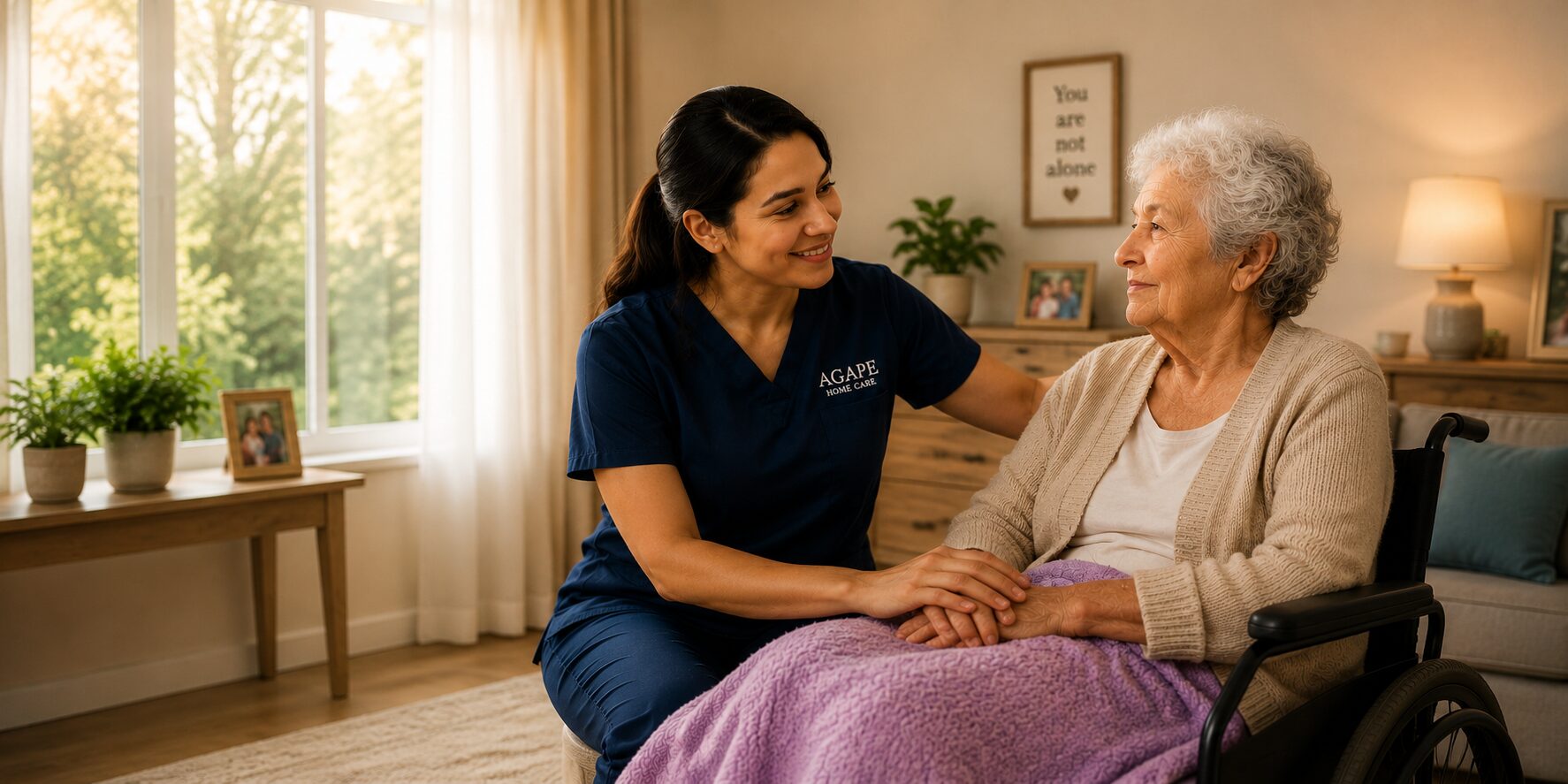
We get calls like this more often than you might think. A family has already called two or three agencies — maybe four. They’ve been told the case is “too complex,” that the hours aren’t a good fit. They’ve run out of easy options. Then they call us.
We can’t always say yes — and we’ll be honest about that. But we say yes more often than most. And families deserve to understand why.
What “Declined” Usually Means
When an agency declines a case, it’s rarely because the situation is impossible. It’s usually because it’s inconvenient, unprofitable, or outside what that agency has built its model around. Large agencies — particularly franchise operations — work best with standard cases. That model works well for many families. But home care needs are not always standard.
Why We Built Agape This Way
When we started Agape, we made a decision early on: we would not turn away cases simply because they were hard. This required investing in caregivers who are genuinely skilled at behavioral management — not just task completion. It meant staying personally involved in difficult cases in ways that a large franchise operation simply can’t.
Twelve years later, that decision shapes everything we do.
The Kinds of Cases We Accept
Advanced Dementia with Behavioral Symptoms
Clients with significant agitation, sundowning, resistance to personal care, repetitive or disruptive behaviors. Our caregivers are trained in redirection, de-escalation, and maintaining dignity through all of it.
Clients Who Resist Accepting Care
Many older adults — particularly those who have been fiercely independent — resist the presence of a caregiver at first. A skilled caregiver can build trust over weeks. We’ve done it many times.
Non-Standard or Complex Schedules
Split shifts, overnight care, weekend-only coverage, care that bridges multiple settings. We build around what the family actually needs.
Care Inside Assisted Living, Memory Care & Skilled Nursing Facilities
Some clients in residential facilities need additional one-on-one support that the facility’s staffing ratios don’t allow for. We send private duty caregivers directly into these settings — your loved one gets dedicated, personal attention even inside a facility.
Hospital-to-Home Transitions
One of the highest-risk periods for an older adult is the 30 days following a hospital discharge. Families often need coverage quickly — sometimes same-day. We’re built for this.
Clients Who Speak Languages Other Than English
We work to match caregivers to clients based on language and cultural background whenever possible.
What We’re Honest About
There are situations that fall outside the scope of what a non-medical home care agency can safely provide — wound care, injections, IV management. If a client’s primary needs are clinical in nature, we’ll tell you that clearly. We would rather have an honest conversation than take a case we can’t serve well.
We’re Here to Help
Agape Home Care has served hundreds of families across Orange County for over 14 years. We answer our own phone — 24 hours a day, 7 days a week.
(949) 690-9990Request Free Assessment
✓ Licensed Home Care Organization
✓ All caregivers CDSS-registered
✓ Serving all of Orange County
✓ Same-day placement available